Best football betting sites in the UK

Why the stakes are high

Every Saturday night, the pitch lights blaze and the crowd roars, but behind the roar, a silent war of numbers rages. Bet sizing, live streaming, in‑play twists—these are the new ballads of the modern match. The market isn’t just about predicting winners; it’s about timing, odds engineering, and the thrill of a quick payout. If you’re looking to turn that buzz into a bankroll, you need a platform that matches the game’s pace.

Top-tier odds, no fluff

Not all bookmakers are created equal. The best ones offer razor‑sharp odds that shave the house edge to a fraction. Think of it like a high‑speed train that never stops to refuel. Some sites even publish real‑time odds updates that sync with the live score. That means you can catch a late‑game surge and still win. The trick is to pick a site that updates in milliseconds, not seconds.

Bonuses that actually count

Promotions are a double‑edged sword. A generous welcome bonus is great, but if the wagering requirements are a mile long, you’re just chasing a mirage. Look for sites that give a clear, low‑rollover bonus tied to football bets. A typical sweet spot: a 100% match up to £100 with a 5x multiplier on a single bet. That’s a real deal. Remember: the most enticing offers often come with a catch—check the fine print before you click.

Live betting, live action

In‑play betting is where the real drama unfolds. The best sites have a slick interface that updates instantly as a goal is scored, a yellow card issued, or a penalty is taken. Some even offer “live market” predictions based on player form. The key? Low latency, wide variety of markets, and a mobile app that doesn’t lag. If you’re watching from a coffee shop, you don’t want a 5‑second delay.

Secure, swift withdrawals

Money moves faster than a striker in a counter‑attack. The top platforms support instant e‑wallet withdrawals and have a reputation for transparent processing times. A quick, hassle‑free payout can turn a good day into a great one. Don’t forget to check whether the site offers a “cash out” feature on live bets—this can lock in a win before the final whistle.

Community and support

Betting isn’t just a solo sport. The best sites host forums, chat rooms, and live support that can answer a question in under a minute. A community of seasoned punters can be a gold mine for tips. And a responsive help desk? That’s a safety net when something goes wrong.

How to pick the right one

Start with a quick comparison of odds on the same fixture across three or four sites. If one consistently offers better odds, that’s a win. Next, test the mobile app. A clunky interface can kill your edge. Finally, read a few user reviews—real feedback beats glossy marketing slogans. If a site promises “the best odds ever” but can’t back it up, skip it.

Remember: the game is dynamic

Odds shift like a football pitch after a corner kick. A good bookmaker lets you adjust your stakes on the fly. That flexibility is what separates the pros from the amateurs. Don’t get locked into a single platform. Keep an eye on the market and switch when the odds look sweet.
Check out onlinegamblingsitesuk.com for a quick rundown of the top sites and their latest offers. They keep the list fresh and the data accurate. Trust the source that’s already on the field. Good luck, and may the odds be ever in your favor.

Comments Off on Best football betting sites in the UK

The Growth of NFL Fantasy Sports and Its Effect on Betting

Why the fantasy boom matters now

Fans are no longer just watching the gridiron; they’re living it through stats, drafts, and weekly lineups. That shift turned a weekend hobby into a year‑round obsession, and the ripple effect landed straight on the betting floor. Here is the deal: when fantasy owners start caring about a player’s weekly target count, every sportsbook feels the pressure to adjust spreads, over/unders, and prop markets. The result? Odds that move faster than a quarterback’s scramble, and a betting landscape that now has to factor in millions of “what‑ifs” that weren’t even on the radar a decade ago.

How fantasy data reshapes the betting playbook

First, the data stream. Fantasy platforms churn out player projections, injury updates, and matchup analyses in real time. Bookmakers, who once relied on historical averages, now scrape that feed to fine‑tune their lines. Imagine a rookie running back who suddenly climbs the fantasy charts after a surprise start—suddenly his over/under for rushing yards jumps 15 percent, and bettors with a nose for the market start laying money on the side. That’s no accident; it’s the new norm.

Second, the psychology. When a fan invests money and time into a fantasy roster, they become hyper‑engaged. They study snap counts, route trees, defensive schemes—stuff that the average bettor might ignore. That depth creates a niche of “smart money” that can tip the scales. A single veteran wide receiver, for example, might be trending low on the betting board because his fantasy owners anticipate a touchdown surge that the book hasn’t priced in yet. The disparity fuels sharp action and, inevitably, a wave of line adjustments.

Third, the crossover promotions. Sites like betnflfootballuk.com are bundling fantasy contests with betting bonuses, blurring the line between the two worlds. This hybrid approach not only locks in a user’s attention but also creates a feedback loop: more fantasy play drives more betting volume, and vice versa. The synergy is pure profit for operators, but it also means the average punter now faces a more complex decision matrix.

And here is why you should care: the edge is migrating from the book to the player‑who‑does‑the‑research. If you still rely on “gut” feelings, you’ll get steamrolled by data‑driven crowds. The future isn’t about blind speculation; it’s about leveraging the same depth of analysis that fantasy managers use, but applying it to betting lines. Start treating your bets like you would a fantasy draft—rank players, evaluate matchups, and, above all, stay ahead of the information curve.

Bottom line: the explosion of NFL fantasy sports has turned the betting market into an ultra‑responsive, data‑intensive arena. Your next move? Pull the same granular stats you use for your fantasy lineups, cross‑reference them with betting odds, and act before the spreads catch up. Get ahead of the curve, or watch the market outrun you.

Comments Off on The Growth of NFL Fantasy Sports and Its Effect on Betting

How to Spot Early Speed for Trifecta Positioning

Why the First Turn Matters

Every seasoned bettor knows the first half‑mile is the make‑or‑break window. If a horse bolts out of the gate, you’ve got a ticket to the trifecta; if it stalls, you’ve just wasted a dime. No fluff, just raw edge.

Read the Gate Reaction

Look: a clean break, no scrambles, no hesitation. That’s the neon sign saying “I’m fast.” A horse that nudges the starting bar, hesitates, or stumbles is a red flag. You don’t need a crystal ball—just your eyes and a pulse on the surface.

Watch the Early Fractions

Splits are the heartbeat of a race. A sub‑21 second first quarter for a mile‑and‑a‑half? That’s a speed demon. Anything slower, and you’re probably watching a closer, not a front‑runner. The data tells the story, the mind knows the bias.

Post‑Position Patterns

Inside posts often get a head start on the inside rail, but a jockey with a reputation for breaking well can flip the script. Don’t just trust the draw; factor the driver’s history. A front‑running trainer with a habit of pushing the pace? Mark him.

Historical Formulas

Take the last three races. If a horse consistently leads early and never drops back, that’s a pattern you can monetize. If it flips into the pack after a fast break, you’ve got a potential trap—use it to your advantage.

Live Stream Instincts

There’s a gut feeling when you see a horse surge ahead. It’s not myth; it’s the brain processing dozens of cues in seconds. Trust that twitch, but back it with tangible data. That’s the sweet spot where intuition meets analytics.

How to Use Trifecta Odds

When you’ve identified the early speed horse, load the trifecta board. Pair it with a second horse that loves to stalk the leader and a third that can close. That three‑horse combo is the profit engine. Check trifectaboxbet.com for real‑time odds and lock in the optimal price.

Final Play

Scan the gate, note the first quarter, align with past patterns, and then—no hesitation—place the bet. The early speed horse is your anchor; the stalker is your safety net; the closer is your kicker. Do it now.

Comments Off on How to Spot Early Speed for Trifecta Positioning

Value Betting in the UEFA Champions League Final

Why the Final is a Different Beast

The biggest stage on the planet turns every statistic into a headline, every mistake into a headline‑grabbing meme. Most punters chase the obvious, the crowd‑sourced favorite, and end up flat‑lined. The real money rides on the edges that the masses overlook.

Understanding Value: Odds vs Reality

Odds are a market snapshot, not a prophecy. Bookies tilt the line to balance their book, not to predict the outcome. If a team’s implied probability is 1.75 (≈57 %), but your model says 62 %, that spread is a value opportunity.

Spotting the Hidden Factors

Look beyond form. Tactical nuance, player fatigue, even the weather can tilt a match. A midfielder nursing a hamstring might sit out, forcing a reshuffle that the bookmakers didn’t fully price in. That’s a crack you can exploit.

Data Crunch: The Core of Your Edge

Don’t rely on gut alone. Pull in xG, possession under pressure, and set‑piece conversion rates. Your algorithm should output a win probability, a draw probability, and a loss probability. Compare those to the market odds, and the gap screams value.

Psychology of the Crowd

Fans love drama, especially in May. The underdog story sells tickets, and bookmakers inflate odds on the sentimental side. That inflation is your profit cushion. Bet when the crowd is screaming “Goal!” and you’re hearing a whisper of “Buy low.”

Bankroll Management and Timing

Stake size should match edge magnitude. A 2 % edge? Bet 2 % of your bankroll. A 5 % edge? Up it to 5 %. Also, watch the market movement. Early odds are often most mispriced; wait too long and the edge evaporates.

Live Betting: The Real-Time Gold Mine

In‑play dynamics shift the probabilities faster than pre‑match forecasts. A red card early on? Suddenly a 1.5 goal favorite is a 3.0 over. React instantly, lock in the new value.

Where to Find the Numbers

Professional data feeds, scouting reports, and even social media sentiment trackers. Combine them into a single spreadsheet, run a Monte‑Carlo simulation, and let the numbers speak.

championsleaguefinalbet.com

Actionable Takeaway

Pick one undervalued market—first‑goal scorer, half‑time/draw/full‑time, or Asian handicap—run your model, compare to the odds, and place a calibrated bet before the first kick. That’s the ticket.

Comments Off on Value Betting in the UEFA Champions League Final

How to Host a Corporate Event at a Greyhound Stadium


Why a Greyhound Track Is a Game Changer

Picture your team gathered not in a sterile boardroom but under the roaring lights of a greyhound track, the scent of turf mixing with adrenaline, as the crowd’s cheers echo in the distance. That energy translates into engagement like a conference coffee can’t match. You’re not just booking a venue; you’re scripting a narrative where every lap of the dog is a metaphor for business agility, and every finish line a milestone to celebrate. The roar becomes your applause, the race your productivity sprint. It’s a bold statement that your brand doesn’t settle for bland.

First Step: Pick the Right Time of Day

Events on a sunny Saturday are great, but the real magic happens late in the evening when the track’s lights blaze like a neon sign on the night skyline. The dim, focused lighting sets a professional tone, while the buzz of the crowd provides an energizing backdrop. Booking a session after a major race allows you to use the post‑event crowd as an informal networking pool.

Next Move: Understand the Layout

Greyhound stadiums aren’t your typical conference centers. The track is the circle, the stands the audience, and the central pit the stage. You’ll want to carve out a private pavilion on the 150‑meter stretch, ensuring visibility of the action while shielding speakers from the roar. Think of the arena as a living organism; each section has its own pulse.

Set the Agenda Around the Race

Kick off with a live commentary of the race to capture attention. Then segue into breakout sessions that mimic the race’s phases—warm‑ups, acceleration, and sprint to finish. Each segment should feel like a dog’s burst of speed, keeping participants on the edge.

Use the Track as a Metaphorical Tool

When presenting a new product, compare it to a greyhound’s sleek form and precise strides. Discuss how your solution cuts through market obstacles with the same grace. Or, during a workshop, set a “relay” where teams pass a baton of ideas across the track’s length. The visual continuity of a race amplifies the metaphor, making abstract concepts tangible.

Logistics – Keep It Tight

Security is paramount. Coordinate with stadium staff to lock down a VIP zone—think of it as a secure kennel where executives can relax without distractions. Arrange catering that feels like a post‑race feast; hearty, easy to eat, yet stylish enough for corporate taste buds.

Short and Sweet: “Food is king.”

Short and sweet: “Food is king.”

Tech Setup

Make sure you have a reliable AV system that can handle the roar of the crowd without distortion. A high‑quality mic placed near the track can turn every bark into an announcement, and a live feed onto a screen will keep remote attendees glued.

After the Event: Capture the Momentum

Send a post‑event video montage that syncs with the race’s final lap, featuring key moments and a call to action. Use the stadium’s iconic silhouette as a watermark, reminding everyone that this wasn’t just an event—it was an experience.

Takeaway: Stand Out, Sprint Forward

Смотри: a greyhound stadium is more than a venue; it’s a stage where speed, strategy, and spectacle collide. Nail the timing, leverage the layout, and let the race fuel your corporate narrative. Ready to turn the track into your next big win?

For the ultimate guide on securing the venue and tailoring the experience, check out sheffieldgreyhound.com.

Comments Off on How to Host a Corporate Event at a Greyhound Stadium

The Significance of the “Tattenham Corner” Turn

Why the Turn Eats the Competition

Picture a horse thundering into a hairpin that slams you into a wall of inertia—Tattenham Corner does exactly that, turning flat‑track theory into raw, gut‑punching reality. If you’re hunting value, you learn to respect the curve; ignore it, and you’ll watch your bankroll dissolve faster than a puddle in July. This isn’t a gentle suggestion; it’s a hard‑won rule etched into the minds of every jockey who’s ever felt the grit of the sand on his boots. Spot the corner, respect the danger, and you’ll start seeing odds that actually move.

History That Haunts Modern Betting

Back in the ’70s, a misjudged maneuver at Tattenham Corner cost a seasoned trainer a dozen horses and a reputation that never recovered. That story still lingers in the betting circles of the UK, a cautionary tale that the corner isn’t just a bend—it’s a crucible where talent is tested and pretenders get roasted. Fast‑forward to today, and the data still screams the same message: horses that can negotiate the turn cleanly earn a premium on the board, while the clumsy ones get left in the dust. That’s why seasoned punters keep a keen eye on sectional split times; they’re the pulse that tells you who’s comfortable in the squeeze.

Technical Edge: Reading the Split

Here’s the deal: the key metric is the 1,200‑meter to 1,500‑meter split, the stretch that includes the turn. A horse that clocks a faster split than its overall rating is a sign of agility and balance. You’ll spot it in the form guide, hidden behind the glossy photos. The smart move? Filter for horses that have a positive split delta, and you’ll instantly cut noise from the signal. Trust the numbers, but also trust your gut—if a horse looks jittery on the video, that could translate to a shaky finish.

Psychology of the Jockey and the Crowd

Look: jockeys who anticipate the corner’s bite will pull up early, trim the reins, and unleash a burst right after the turn. Those who wait too long get caught in a bottleneck of horses, and the betting public punishes that hesitation with longer odds. The crowd’s roar at Tattenham Corner can also flip the market; a sudden surge in betting volume after a lead‑trainer’s horse hits the turn often signals insider confidence. Keep your ear to the ground, and you’ll catch these shifts before the odds settle.

Actionable Takeaway

Next time you log into epsomoaksbetting.com, zero in on the 1,200‑meter split, filter for positive delta, and place a wager on the jockey who’s known to “pull up early.” That’s the shortcut to turning the Tattenham Corner from a nightmare into a profit center. Go.

Comments Off on The Significance of the “Tattenham Corner” Turn

How Tall is Tom Cruise

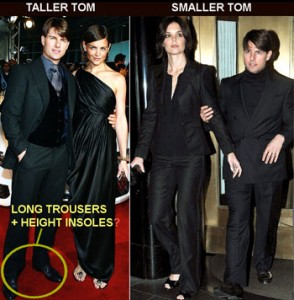
How tall is Tom Cruise? Is a question that is asked over 27,000 times each month. Tom Cruise’s height is 5’7 ft. You might be asking yourself why so many people ask “ How tall is Tom Cruise?”. The main reason for the request is due to the fact that his height seems to change from movie to movie. His height seems to range from 5’7 ft. all the way up to 6’1 ft. See the illustration below ” How tall is Tom Cruise “.

How tall is Tom Cruise

How tall is Tom Cruise

In the Picture above you can see that Tom Cruise’s height has increased significantly. If you want to see these shoes up close click here

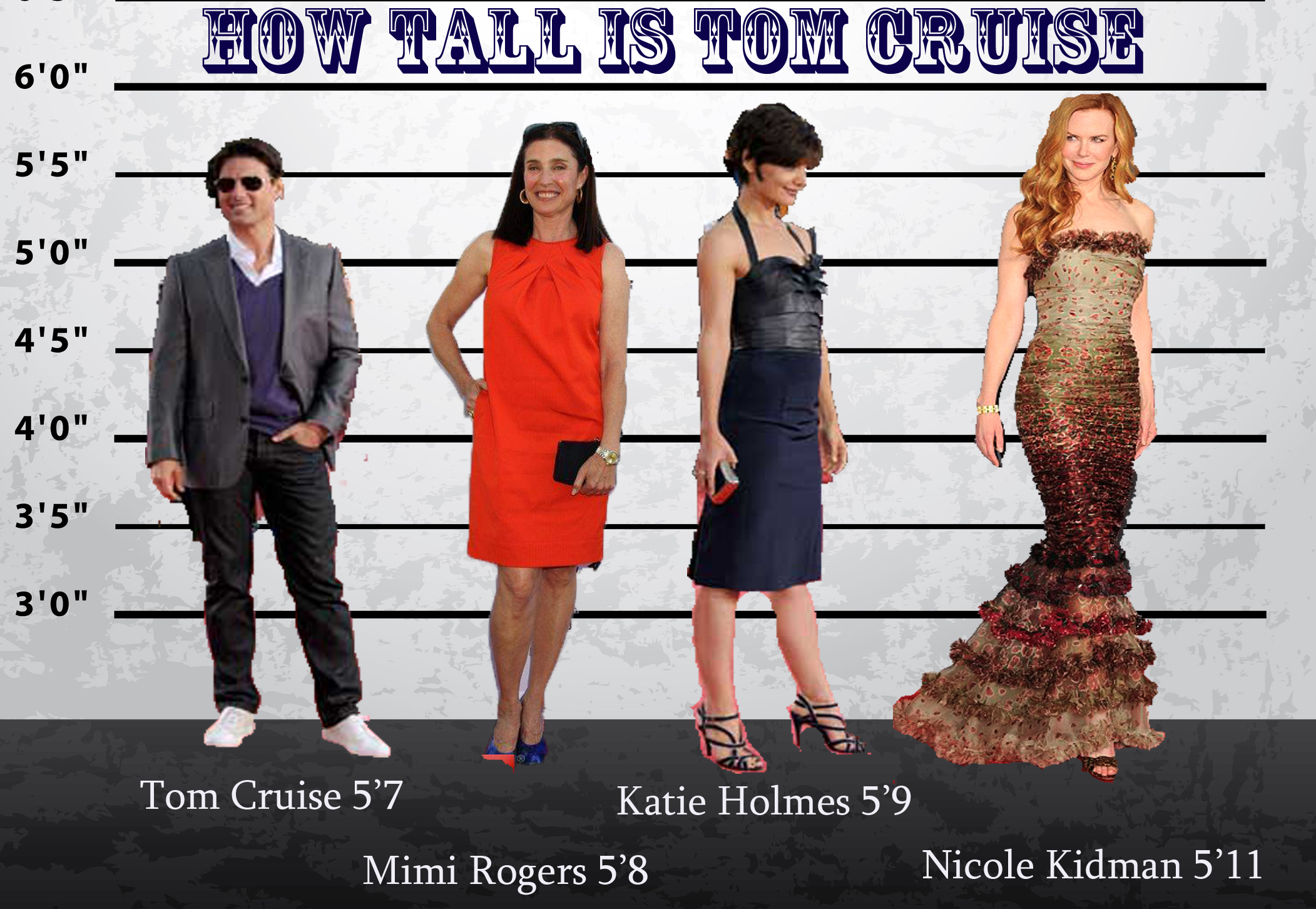
How tall is Tom Cruise? I am also asked this frequently because of how tall he looks compared to his various wives. Tom Cruise has been married 3 times starting with Mimi Rogers, Nicole Kidman and finally Katie Holmes . Tom Cruise married his first wife, Mimi Rogers in 1987 when he was 24 . Mimi Rogers was 5’8 tall which is 1 inch taller than Tom Cruises height. She was also almost ten years older than him. Their marriage ended in divorce once Tom’s career took off, as well as his height. Many people ask, “ How tall is Tom Cruise, compared to Nicole Kidman?” the answer to that question is that he is 5’7 ft and Nicole Kidman is 5’11. Nicole Kidman, after divorcing Tom Cruise was quoted as saying , “ At least now I can start wearing heals again”. Tom Cruises 3rd and most recent wife had 2 inches on Tom Cruises height standing at 5’9 ft.

See “How tall is Tom Cruise” compared to his wives below

How tall is Tom Cruise Compared to his Wives

How tall is Tom Cruise Compared to his Wives

Tom Cruise has a secret which is one of the reasons his height fluctuates so much. He uses elevator shoes. Below is a picture of Tom Cruise without elevator shoes. You can see that he appears to be on the shorter side. How tall is Tom Cruise ? With Elevator Shoes 6’1 ft. without Elevator Shoes 5’7 ft. He is not the only celebrity who has been caught wearing these shoes. Other famous celebrities known to wear elevator shoes are Justin Beiber, Robert Downing Jr., Mark Walberg, Simon Cowell and many others.


Free Shipping for order over $100 – Elevator Shoes for Men

“How tall is Tom Cruise?” well I think that has been answered now !

Posted in Uncategorized | Leave a comment